How Does Foam Concrete Density Affect Material Performance?
Foam concrete is a lightweight cement-based material produced by introducing stable air bubbles into a cementitious slurry. Different dry densities can be achieved depending on the mix design, foaming process, and application requirements.
Density is one of the key factors influencing foam concrete performance. It is closely related to compressive strength, thermal conductivity, material consumption, and construction characteristics.
1. Density and Compressive Strength
In general, when raw materials, curing conditions, and pore structures are comparable, foam concrete with a higher dry density tends to achieve higher compressive strength.
However, several factors must be considered:
- Foam concrete with the same density may exhibit different compressive strengths.
- Foam stability and pore size distribution affect mechanical performance.
- Cement type, water-to-binder ratio, and curing conditions are also important.
- Density alone cannot determine whether the material meets project requirements.
Therefore, both dry density and compressive strength should be evaluated during quality control.
2. Density and Thermal Performance
Foam concrete contains numerous air voids that help reduce its overall thermal conductivity.
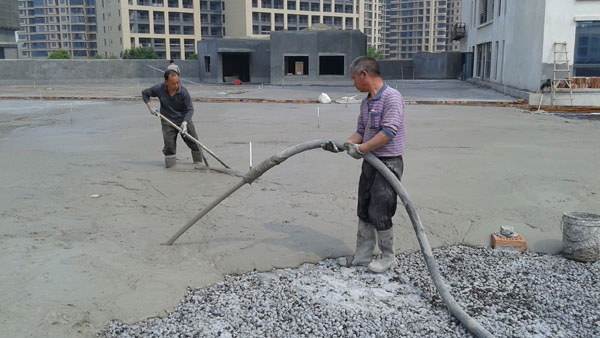
Generally, lower-density foam concrete tends to have lower thermal conductivity, making it suitable for applications such as roof insulation and lightweight filling.
However, actual thermal performance also depends on moisture content, pore structure, raw materials, and testing conditions.
Typical Applications by Density
| Reference Dry Density | Typical Applications | Key Considerations |
|---|---|---|
| 300–500 kg/m³ | Roof insulation, lightweight filling | Thermal performance, stability |
| 500–800 kg/m³ | Roof screeds, filling applications | Balance between strength and weight |
| 800–1200 kg/m³ | Lightweight filling with higher strength requirements | Load requirements, workability |
Note: These ranges illustrate general application directions and are not engineering design standards. Final density and performance requirements should be determined through project specifications and testing.
3. How to Improve Foam Concrete Quality Consistency
To produce stable foam concrete, the following factors should be carefully controlled:
- Foam quality: Maintain uniform and stable foam to minimize bubble collapse and bleeding.
- Mix design: Control the water-to-binder ratio and material proportions.
- Mixing process: Ensure uniform foam distribution without excessive mixing.
- Density monitoring: Regularly measure fresh wet density and establish its relationship with final dry density.
- Curing management: Apply appropriate curing procedures based on the material system and environmental conditions.
4. DWELLFOAM Technical Solutions
DWELLFOAM focuses on foam concrete technology, foaming materials, foam generation equipment, and engineering application solutions.
Our technical support may include:
- Foam concrete mix design development and optimization
- Foaming agent and foam generator selection
- Foam quality and density control recommendations
- Production process training and technical guidance
- Technical support for roof insulation and lightweight filling applications
Looking for the right foam concrete density for your project?
Contact DWELLFOAM with your application requirements, target density, and strength specifications for a technical evaluation.